Food Sovereignty, Local Empowerment and Local Foods
Food security and sovereignty are important objectives and key areas of action of Keystone Foundation. A search for traditional honey collectors and beekeepers of Tamil Nadu by the founders of Keystone in 1995 slowly turned into a movement on food sovereignty in the villages of the Nilgiris. During the course of our study, we realised that the Nilgiris was the most interesting location due to the sheer number of communities traditionally involved in honey harvesting here.
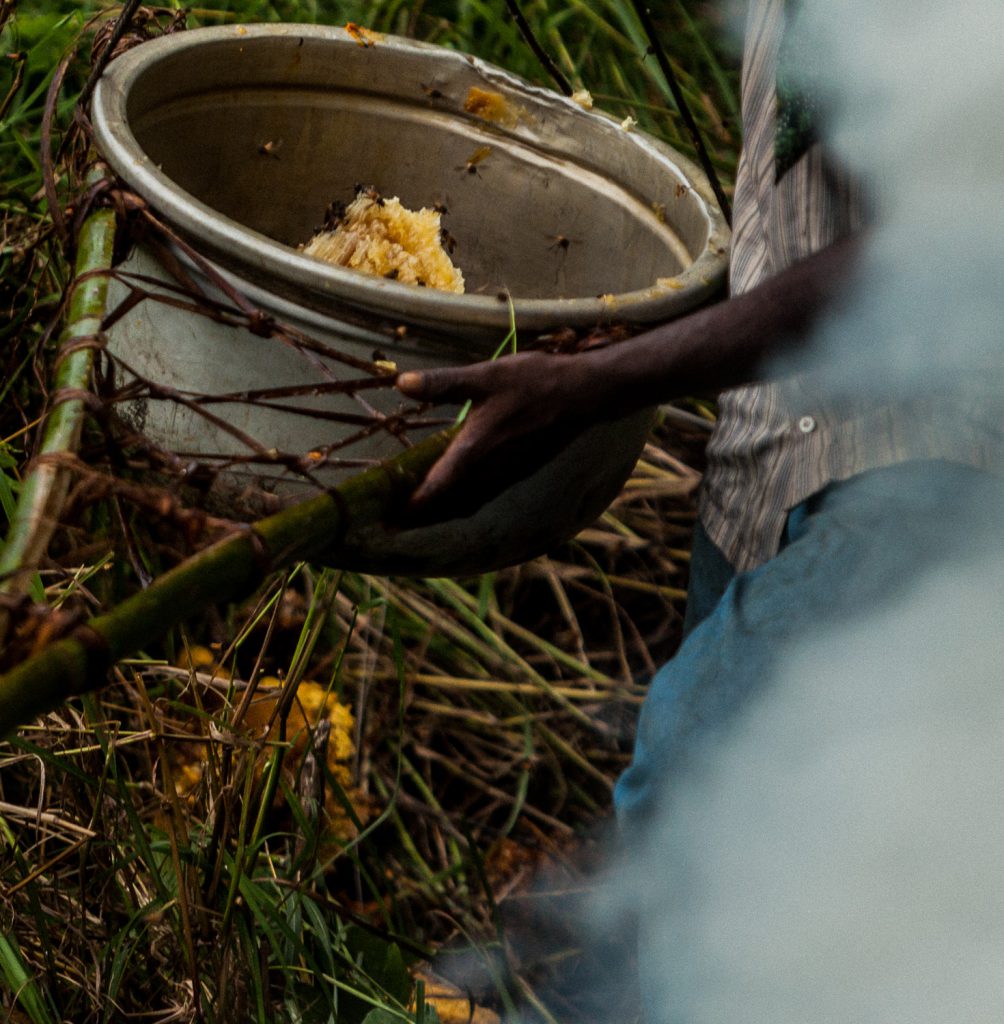
Our idea was to understand the culture and the technique of honey harvesting employed by the indigenous communities of the Nilgiris. While at it, we realised the members of these communities had land but lacked the wherewithal to cultivate it.
They eked out a living doing daily wage labour. Another important takeaway from the study was that the villagers, especially women and children, scored very poorly on health indicators. Anaemia was rampant. Some of the women tested had haemoglobin levels at one or two which was abysmally low even by rural village standards. The irony was that traditionally they were cultivators of highly nutritious food like millets and honey but were nutritionally deprived. Since they had no money to farm, their land lay fallow and was being encroached upon by other estates.
We wanted to help them and sought their participation. Six families from three villages offered us their land measuring less than nine acres for cultivation. We hit the biggest bottleneck in the nonavailability of traditional seeds. The communities had not done farming for so long that they didn’t have a stock of seeds. We procured mother seeds from the neighbouring district of Coimbatore and set up a nursery here.
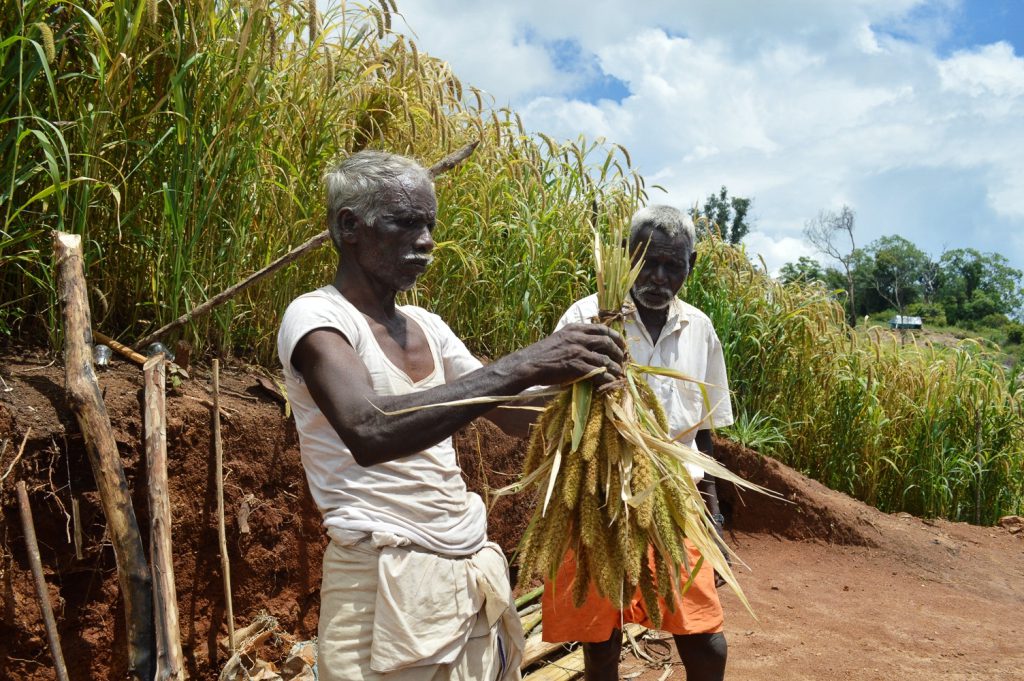
We involved ourselves in working on the land, starting with creating farm ponds and contours for irrigation. We also created seed banks where we introduced a seed barter system where farmers were asked to supply the bank with a measure of good seeds from their crop in return for the seeds we supply. We promised to return double the measure of what they give us the next season. The cultivation in the three villages flourished and more farmhands joined the movement. The farmers continued to work as wage labourers but also realised that their farms have begun to provide them enough for sustenance and the money earned through wage work was an additional income that can be saved for their children’s education, medical needs, etc. Later the community members took up ownership of the movement and kept it going. From starting with cultivating less than nine acres of land, we have now more than 800 acres of land cultivated in the traditional way.

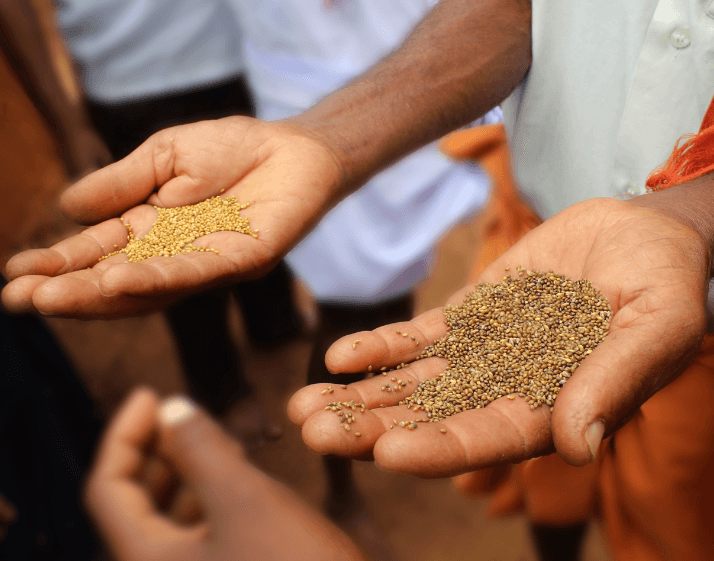
This movement spanning three decades witnessed the farms and families flourish. We documented the return of some traditional farming practices like that of “Mannukaran”, the village agriculture resource person who has traditional knowledge of the fertility of the soil, diseases and the pest management, weather conditions, forecasting and the selection of seeds, who does the worship of the land and walks across it broadcasting a mix of best seeds to mark the onset of the sowing season. This project reignited old traditional farming practices and heralded a change in the way villagers looked at food security and sovereignty. The Covid-19 pandemic gave the impetus to go back to traditional agriculture in a big way. They have understood the importance of traditional farming practices.